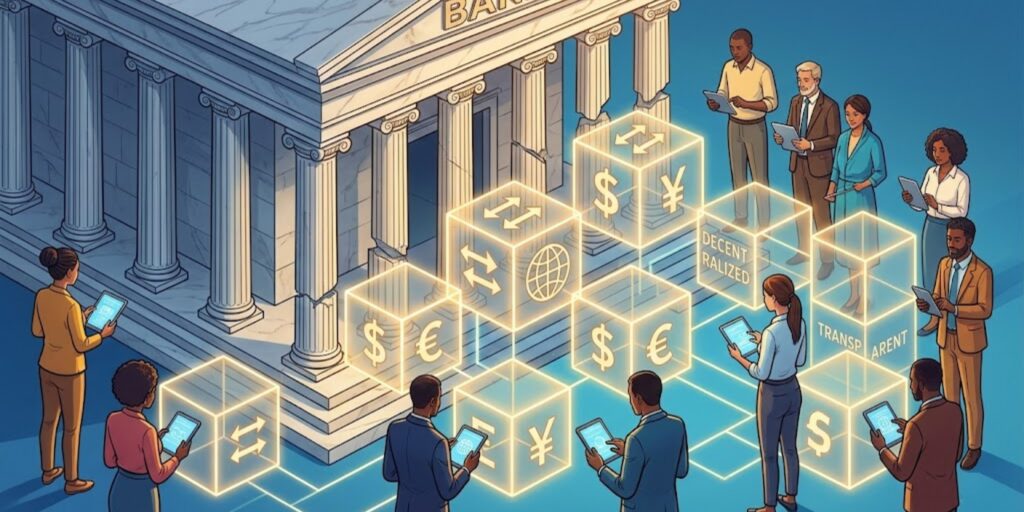

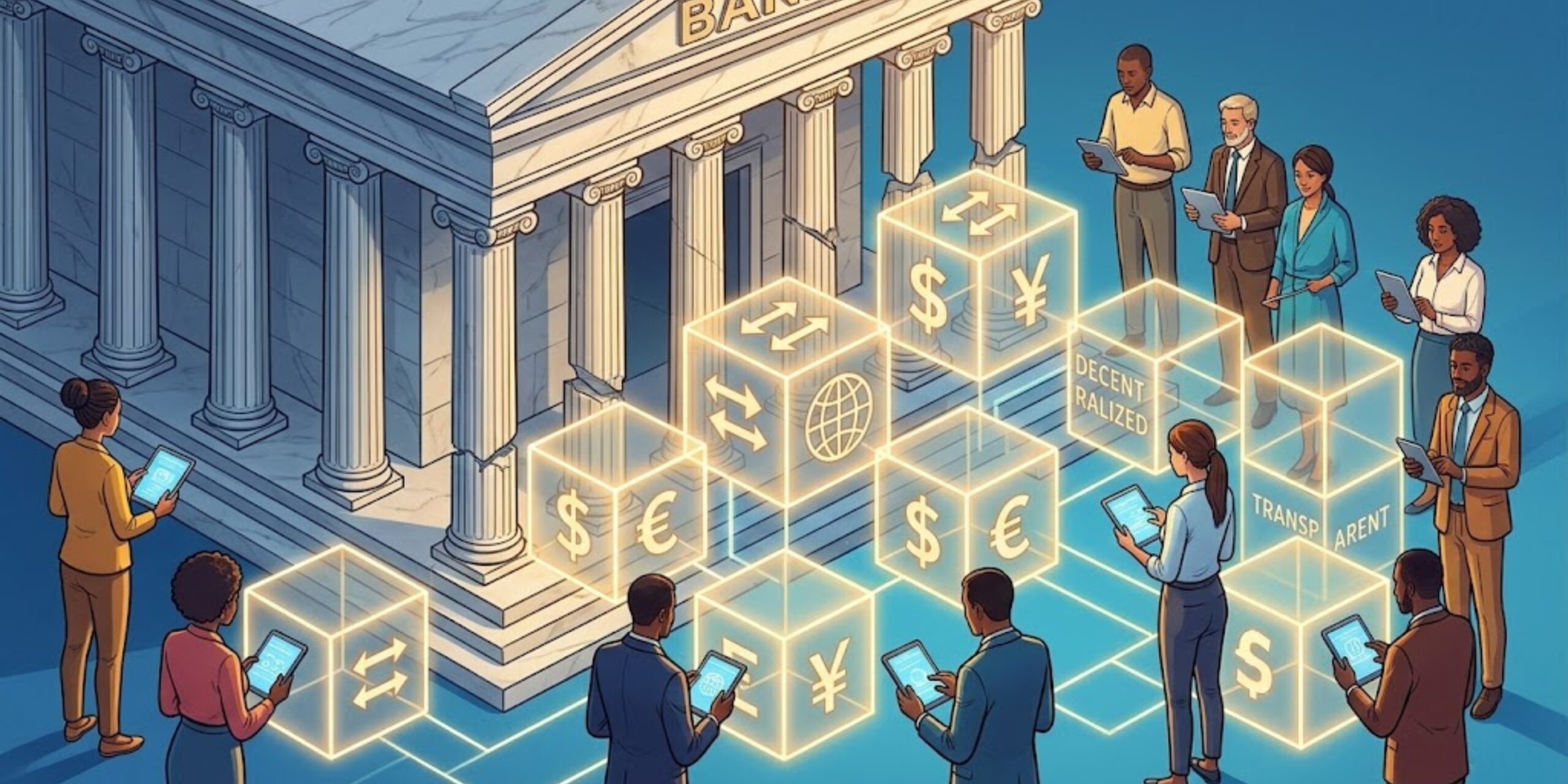
The way we manage money is being fundamentally rewritten. Since the beginning of centralized banking, financial systems have relied on trust—the trust that your bank will hold your funds, process your transactions, and give you access when needed. But in 2026, a new player has changed the game: Decentralized Finance (De-Fi).
At Daanistnaama, we explore the forces that shape our world. The future of decentralized finance represents a major cultural and technical shift, and understanding it is essential for modern wisdom.
What is De-Fi? (Dismantling the Central Bank)
De-Fi is a term used to describe a new financial ecosystem built on blockchain technology. The core idea is to remove intermediaries like banks, brokers, and central authorities.
Instead of a centralized entity processing your transaction, it is processed by a distributed network of computers (a public ledger). * Transparency: Every transaction is publicly verifiable. You can audit the ledger yourself.
- Open Access: Anyone with an internet connection can access De-Fi services. No one needs a credit score or approval to participate.
- Programmability: Traditional money is static. De-Fi money is smart. It is governed by self-executing contracts (Smart Contracts).
How De-Fi Works: Smart Contracts and Decentralized Protocols
A Smart Contract is like a digital vending machine. You put in the required assets (data), and it automatically dispenses the outcome.
For example, a decentralized protocol might facilitate peer-to-peer lending. Instead of applying for a bank loan, you can lock up your digital assets as collateral, and the protocol automatically matches you with lenders. The interest rates are determined by supply and demand, not by a central authority.
The Risks and Challenges of the De-Fi Revolution
It is easy to get caught up in the potential, but De-Fi is not without its risks. We cannot have an open and wise discussion without acknowledging the dangers: * Complexity: Managing private keys and understanding complex protocols requires a high level of digital and financial literacy.
- Smart Contract Vulnerability: Even the best code can have bugs. Audits are critical, but not flawless.
- Lack of Consumer Protection: Unlike traditional banking, there is no government agency to bail you out if something goes wrong. If you lose your keys, your assets are lost forever.
The Future of Decentralized Finance: A Glimpse into 2026
We are witnessing the emergence of a truly global and open financial market. While traditional finance will not disappear overnight, it is already adapting. Banks are exploring Central Bank Digital Currencies (CBDCs) and looking at how to integrate De-Fi protocols into their existing systems.
The true “Daanish” (wisdom) in 2026 is learning how to navigate this dual landscape. The future of decentralized finance offers freedom, but with that freedom comes a high degree of responsibility.
Conclusion
The walls of traditional banking have stood for centuries, but the erosion has begun. The De-Fi revolution is a movement toward transparency, efficiency, and personal sovereignty over wealth. Whether you are an early adopter or a cautious observer, the emergence of a decentralized, programmable, and open-access alternative to central banks is a force that will reshape the future of human cooperation and prosperity.